AMERICAN ARCHIVE
STORIES FROM THE WHITE HOUSE

A First Dinner for the Last King
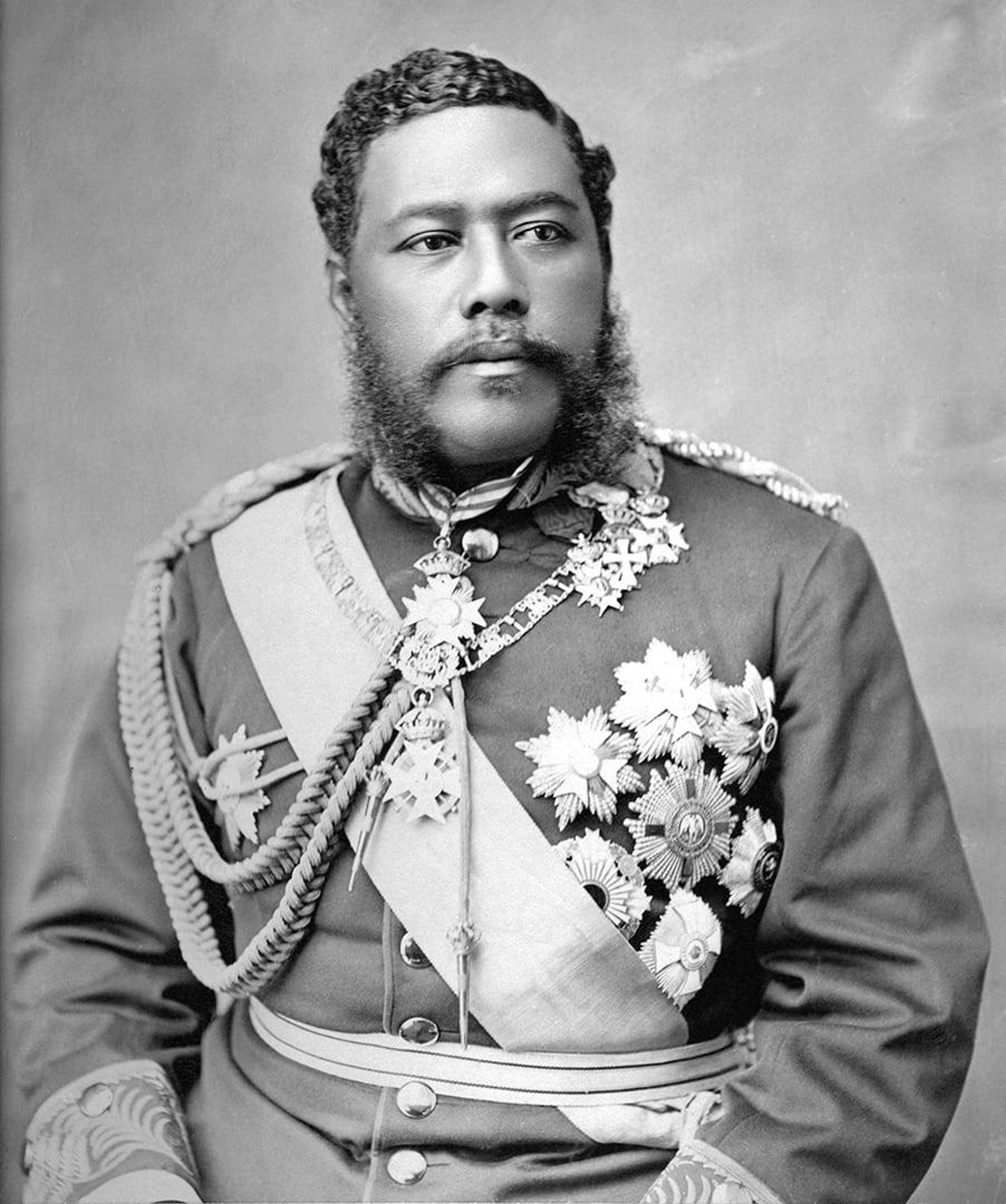
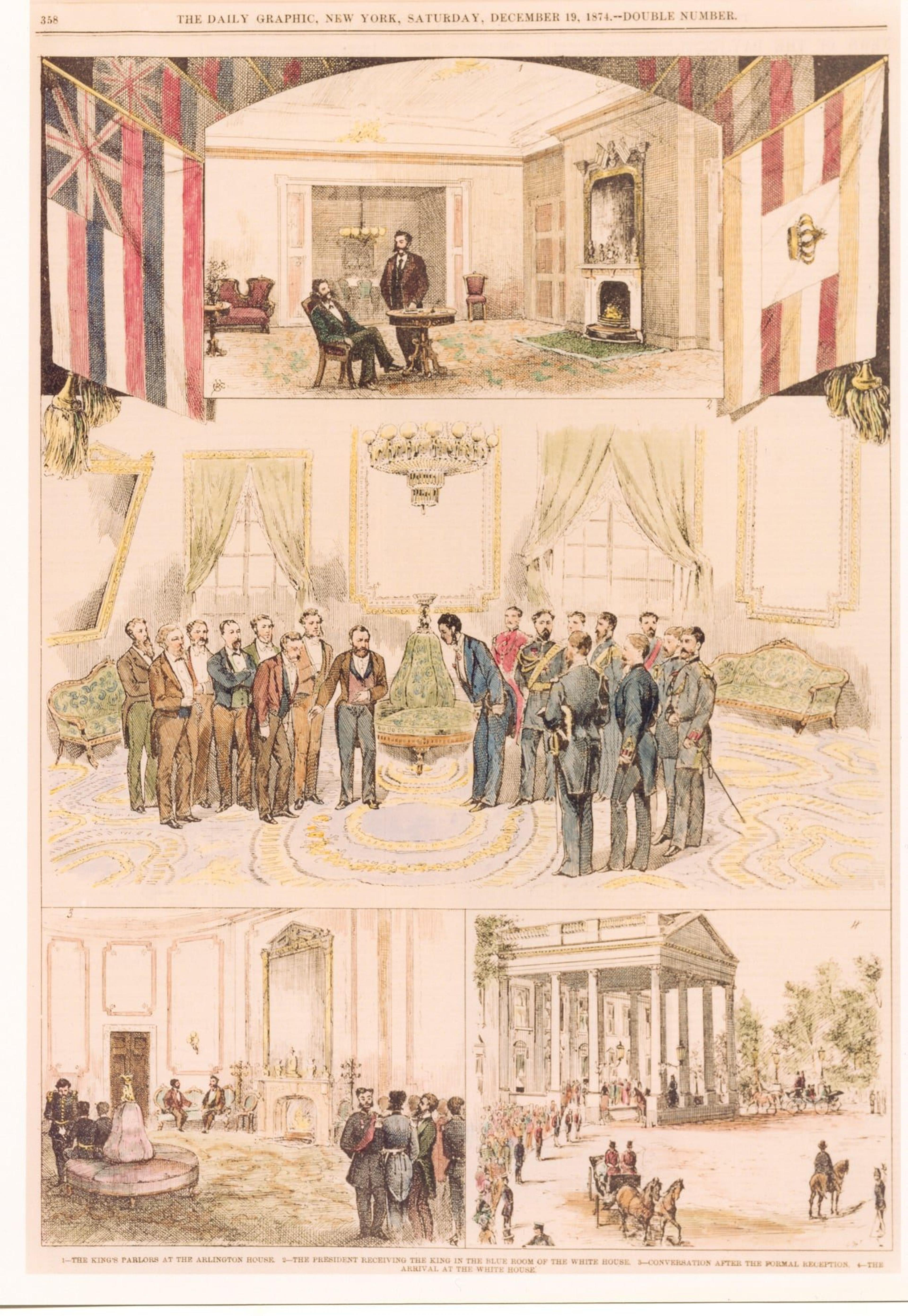
President Ulysses S. Grant, at left, greets King Kalãkaua of Hawai’i, at right, 1874.
White House Historical Association/White House Collection
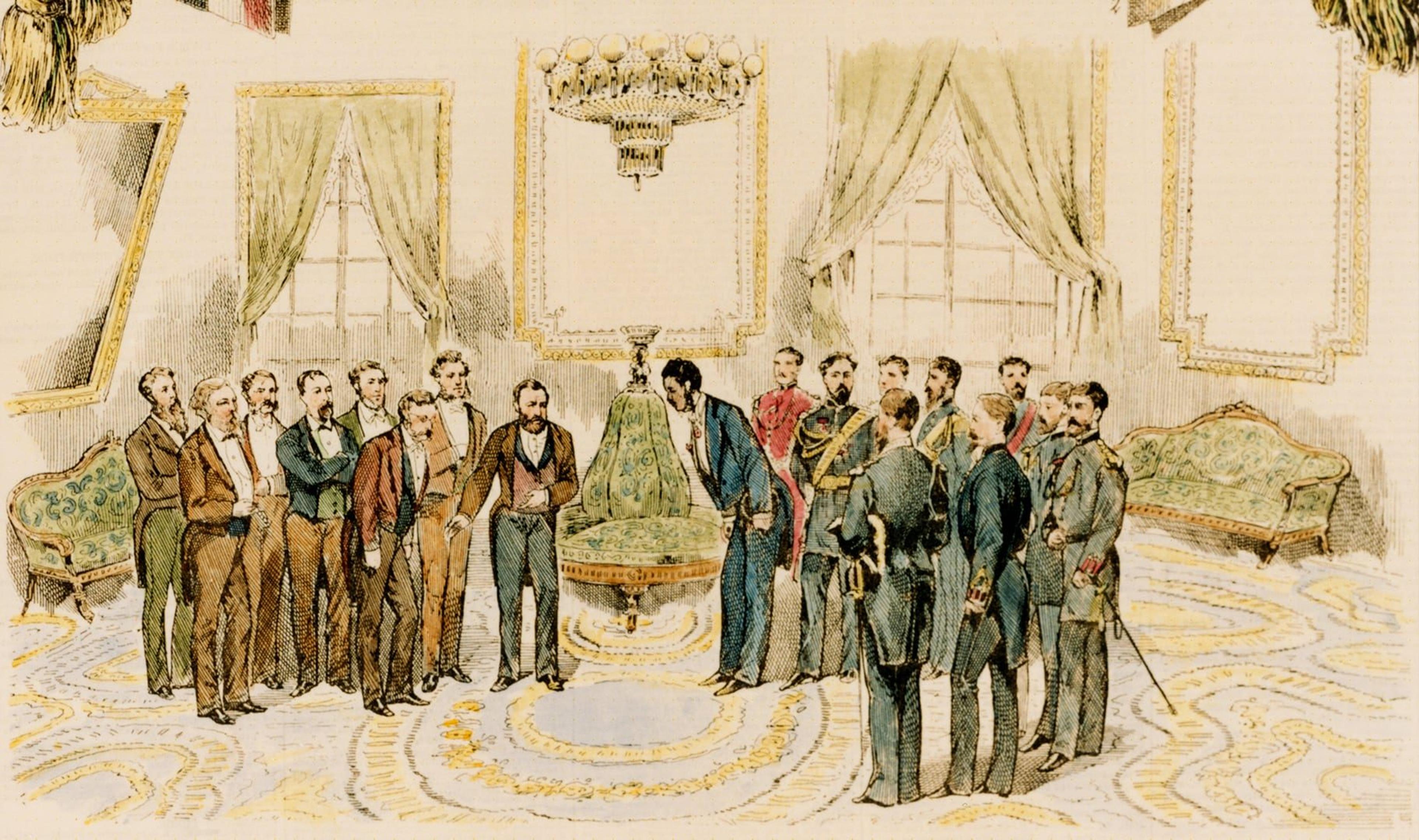
On December 22, 1874, President Ulysses S. Grant hosted the first State Dinner for the last king of Hawai’i.
King Kalãkaua of Hawai’i, the first head of state to visit the United States, sailed to San Francisco and crossed the country by train. He arrived in Washington D.C. on December 12, 1874.
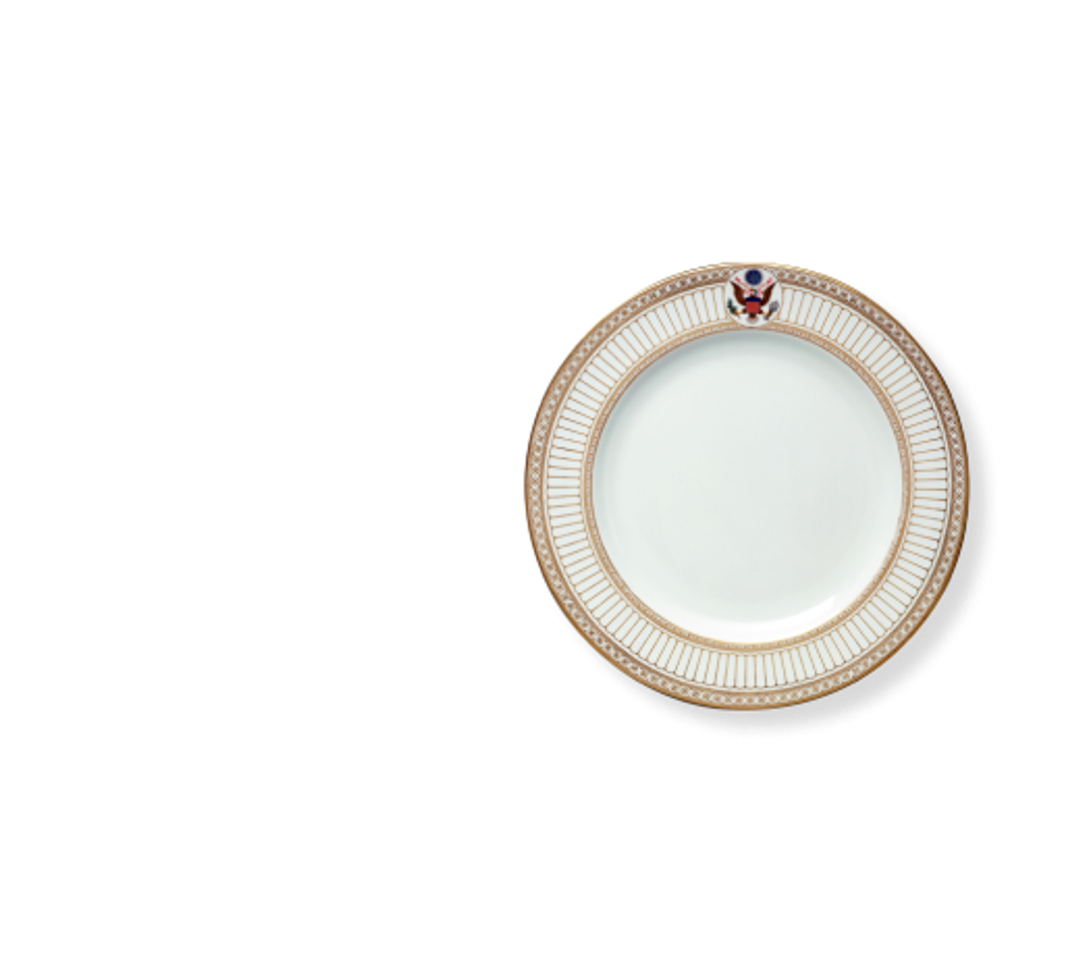
Ten days later, President Ulysses S. Grant hosted him for the nation’s first state dinner for a foreign head of state. Thirty guests dined on pink and white porcelain plates. The Washington Star called the evening, “brilliant beyond all precedent.”
King Kalãkaua’s visit lead to a treaty with the U.S. allowing Hawaiian sugar planters to export their product to America without tariffs, cultivating a boom in the sugar industry. In 1898, Congress passed the “Newlands Resolution” to annex Hawaii, and it was signed into law by President William McKinley.
King Kalākaua of Hawai'i, 1874.
Hawaii State Archives
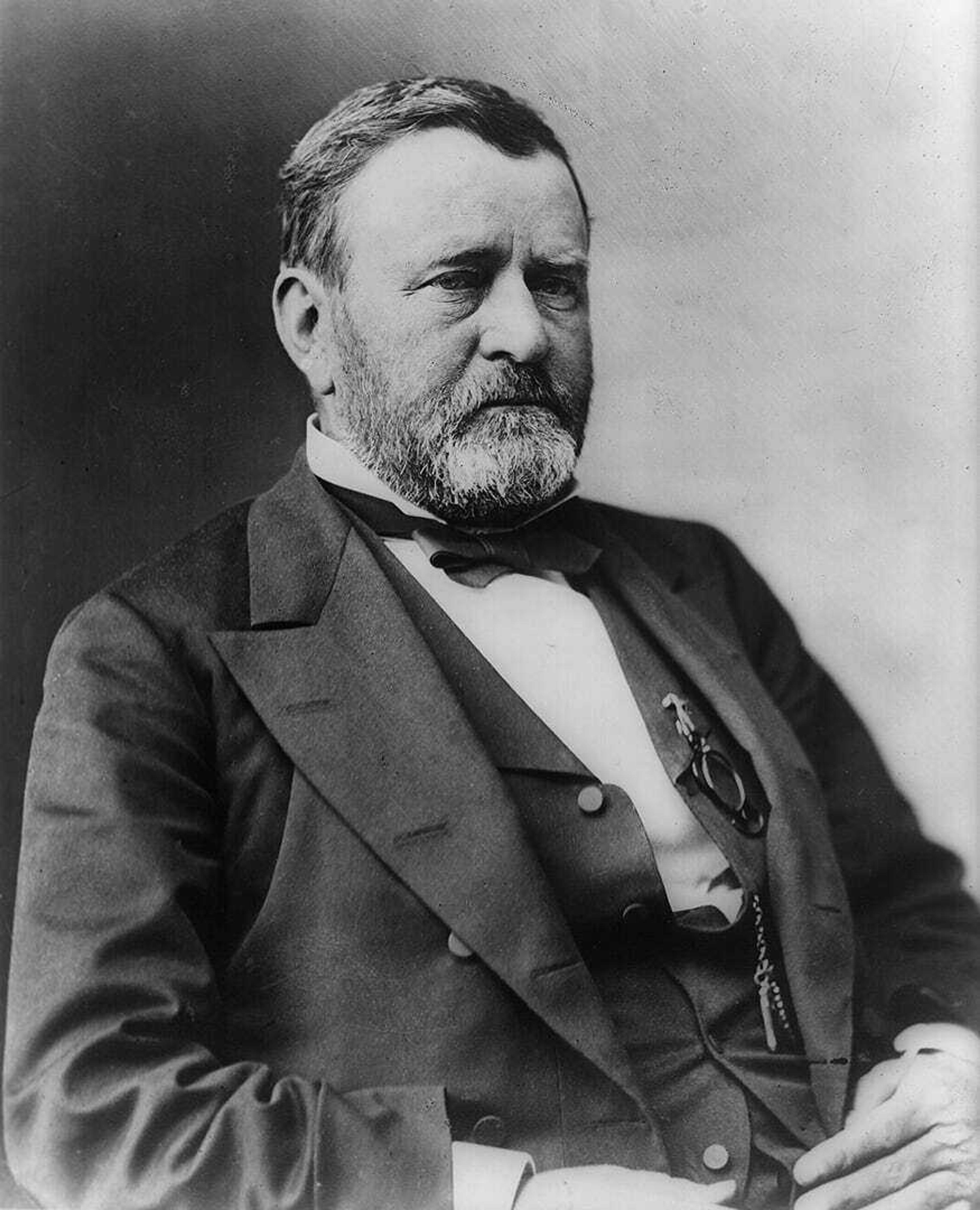
President Ulysses S. Grant, c.1869–85.
Library of Congress
The state visit hosted by President Grant in honor of King Kalãkaua,1874.
White House Historical Association/White House Collection
The State Dining Room, 2015.
Bruce White for the White House Historical Association
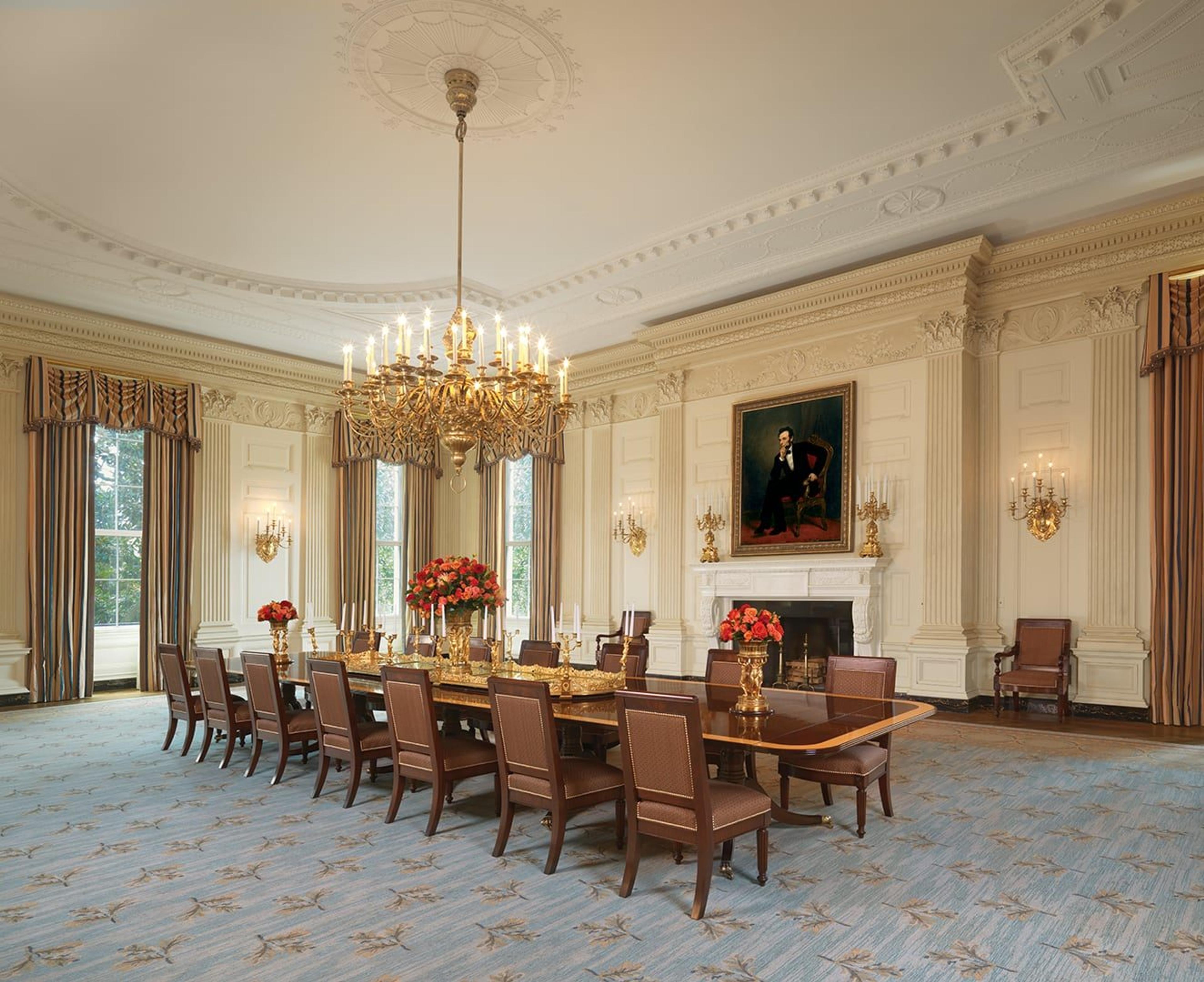
In the State Dining Room
The State Dining Room has been the primary dining room of the White House since the James Madison administration (1809–17). The traditional setting for official and state dinners, the room has also been used to host first family dinners. Today, the State Dining Room serves as a place for official meetings and events.
AMERICAN ARCHIVE
STORIES FROM THE WHITE HOUSE